Mountain biking in the Philippines can start relatively cheaply, but enduro is a different story. Longer-travel suspension, aggressive tires, powerful brakes, and harder riding mean an enduro bike generally requires more maintenance than a bicycle used primarily for commuting or casual XC riding.
So, if you already own an enduro bike, how much does it actually cost to keep riding it for a year?
Elev8MTB examined current Philippine component prices and typical maintenance requirements to build a realistic ownership model for three types of riders: occasional, regular, and aggressive.
The answer is more complicated than simply adding up replacement parts.
The Cost Starts With the Bike
A rider doesn't necessarily need a ₱300,000 superbike to ride enduro. However, modern full-suspension enduro bikes incorporate components that eventually require servicing or replacement.
The most important recurring costs typically come from:
- Tires and tubeless equipment
- Brake pads and brake servicing
- Chains and drivetrain components
- Fork and rear-shock servicing
- Bearings and pivots
- Workshop labor
- Damage and unexpected repairs
How quickly these expenses accumulate depends heavily on riding frequency, terrain, weather and riding style.
A weekend rider doing relatively smooth trails may go months without replacing anything substantial. A rider regularly descending steep, rocky or muddy trails can consume tires, pads and drivetrain components considerably faster.
Tires: One of the Biggest Consumable Expenses
Enduro tires aren't the same as inexpensive general-purpose MTB tires.
Current Philippine listings illustrate just how large the price difference can be. Supreme Bikes PH lists the Maxxis Minion DHR II in enduro/trail specifications from around ₱2,200, while a Minion DHF DoubleDown specification is listed at ₱3,645. A Schwalbe Hans Dampf is listed at approximately ₱4,000.
That means a quality front-and-rear enduro combination can easily represent approximately: ₱4,400–₱8,000 per set.
This is significantly more than basic MTB tires. For comparison, Philippine retailers list some wire-bead Maxxis XC/general MTB tires below ₱1,000 each.
The difference isn't simply branding. Enduro riding can require stronger casings, aggressive compounds and tubeless-compatible construction designed for substantially harder impacts and cornering loads.
For aggressive riders, tires can therefore become one of the largest recurring expenses.
Tubeless Isn't Free Either
Most serious enduro riders run tubeless because of its advantages in puncture resistance and lower-pressure operation.
But tubeless systems require consumables.
Sealant gradually dries inside the tire, particularly in warm conditions, and needs periodic inspection and replenishment. Tape, valves and valve cores can also eventually require replacement.
The individual cost isn't enormous, but it demonstrates an important point about MTB ownership:
Small maintenance expenses accumulate.
A rider who ignores sealant until the tire is completely dry may discover the problem only when a puncture occurs on the trail.
Suspension: The Expense Riders Shouldn't Ignore
A modern enduro bike may have 150–180 mm of suspension travel and sophisticated damping systems.
That performance depends on maintenance.
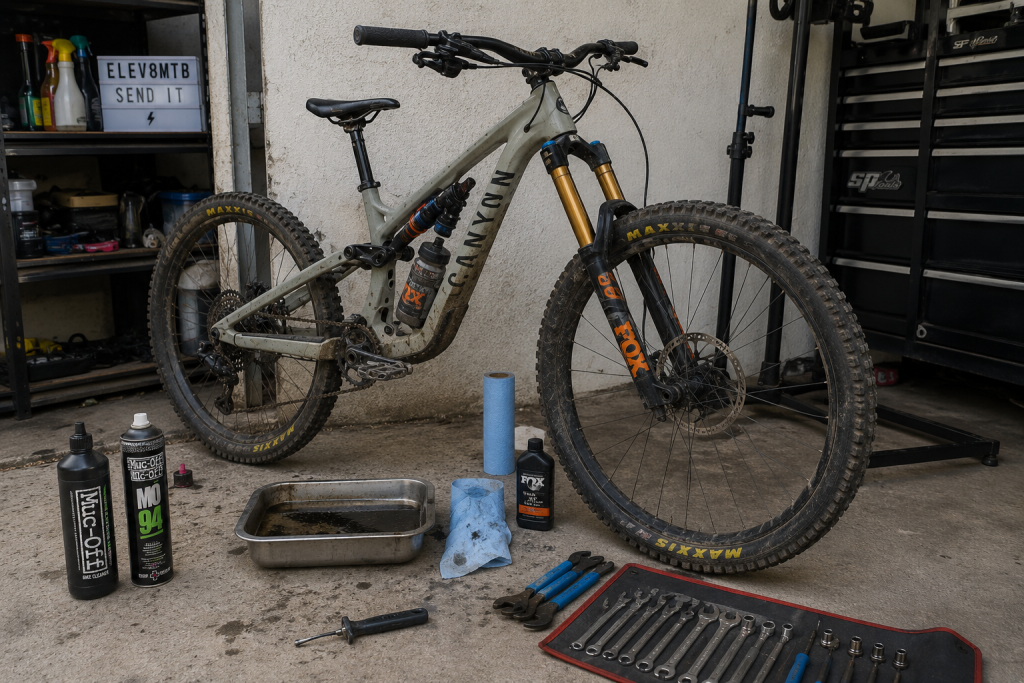
Fork lowers accumulate contamination, lubricants deteriorate and seals wear. Rear shocks also require periodic servicing. Manufacturers specify service intervals according to their particular products and operating conditions, and riders operating in wet, dusty or severe conditions may need maintenance more frequently.
The annual suspension budget therefore depends heavily on the fork, shock and local workshop.
This is one area where riders shouldn't automatically choose the cheapest possible service. Poor suspension maintenance can eventually turn a relatively inexpensive preventative service into a much more expensive repair.
For our ownership model, we therefore treat suspension servicing as a planned annual expense rather than an optional repair.
Brakes: Speed Costs Money
Enduro bikes use powerful disc brakes because descending repeatedly generates significant heat and wear.
Brake pads are consumables.
Wet and muddy conditions can accelerate wear dramatically, while aggressive riders who regularly ride steep descents can go through pads considerably faster than casual trail riders.
Rotors also eventually wear, and hydraulic systems require bleeding and maintenance.
This means the rider who says:
“My bike hasn't needed maintenance all year.”
may simply be postponing maintenance rather than avoiding its cost.
Drivetrain Wear
The chain is another deceptively important expense.
Replacing a worn chain early is relatively inexpensive compared with allowing an excessively stretched chain to wear the cassette and chainring along with it.
That creates an important ownership principle:
Preventive maintenance is usually cheaper than component failure.
Mud, water and contaminated lubricant can accelerate drivetrain wear, making regular cleaning particularly relevant in Philippine riding conditions.
A careful rider may spend slightly more frequently on chains, lubricant and cleaning supplies but potentially spend less on cassettes and chainrings over the bike's lifetime.
Estimated Annual Enduro MTB Ownership Cost
To understand the bigger picture, we created three rider profiles.
These figures are planning estimates rather than fixed market prices because component selection, workshop pricing, trail conditions and mechanical failures vary considerably.
Occasional rider
₱14,300/yr
Regular weekend rider
₱27,500/yr
Aggressive rider
₱48,500/yr
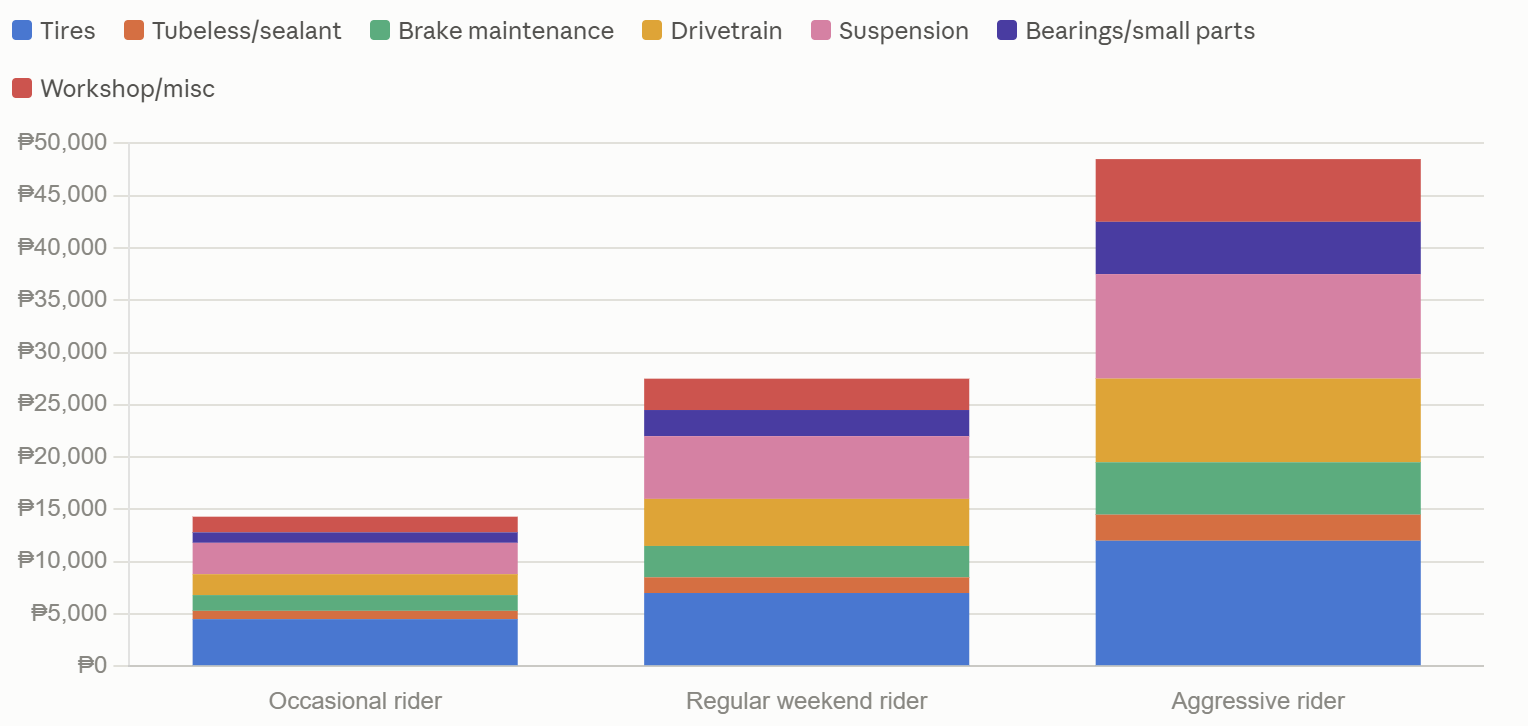
These estimates exclude the initial purchase price of the bicycle, transportation to trails, race entry fees, riding equipment and major crash damage.
That's approximately:
Occasional rider: ₱1,190/month
Regular rider: ₱2,290/month
Aggressive rider: ₱4,040/month
But MTB expenses rarely arrive as neat monthly bills.
You might spend almost nothing one month and then suddenly need a tire, brake pads and suspension service the next.
For that reason, a maintenance fund makes more sense than thinking of MTB ownership as a fixed monthly subscription.
The Hidden Cost: Crashes
This is the category that destroys every spreadsheet.
A normal maintenance schedule can be estimated. A crash cannot.
One bad impact could damage a derailleur, brake lever, wheel, rotor, handlebar or other component. More severe incidents can damage suspension or frames.
An aggressive rider should therefore keep some money outside the normal maintenance budget for unexpected repairs.
Even ₱5,000–₱10,000 reserved as an MTB emergency fund can make an unexpected mechanical problem much easier to manage.
Can You Reduce the Cost?
Definitely.
Learning basic maintenance is arguably one of the best investments an enduro rider can make.
Cleaning and lubricating a drivetrain, checking chain wear, topping up sealant, replacing brake pads and performing basic adjustments can reduce workshop visits while allowing problems to be detected earlier.
However, saving money doesn't mean neglecting the bike.
There's a major difference between:
doing maintenance yourself
and
not doing maintenance at all.
The second option usually becomes more expensive eventually.
Budget vs Premium Components
Interestingly, buying the cheapest component isn't always the cheapest strategy.
A ₱700 general-purpose MTB tire may cost much less than a ₱3,000+ enduro tire, but they aren't necessarily interchangeable products. Current Philippine listings show premium Minion enduro/downhill configurations costing several times more than basic wire-bead MTB tires.
A rider should therefore choose components according to terrain and riding intensity rather than price alone.
At the same time, recreational riders shouldn't assume they need World Cup-level equipment.
The smartest build isn't necessarily the most expensive one.
It's the one appropriate for how you actually ride.
So, Is Enduro MTB Expensive in the Philippines?
Yes—but perhaps not in the way most people expect.
The bike itself is the obvious expense. The real long-term cost comes from keeping a high-performance machine functioning properly.
Based on our ownership scenarios, a Filipino rider might reasonably budget approximately ₱14,000 to ₱50,000 per year for maintenance and consumable components, depending heavily on riding frequency, equipment and terrain.
That is a wide range—and deliberately so.
Someone riding twice a month cannot realistically be assigned the same maintenance cost as someone riding aggressive enduro every weekend.
More importantly, these figures shouldn't discourage people from riding.
You don't need the most expensive suspension, carbon wheels or race-spec components to enjoy enduro. Good maintenance, sensible component choices and learning to work on your own bike can significantly control ownership costs.
The question therefore isn't simply:
“Can I afford an enduro bike?”
A better question is:
“Can I afford to maintain the bike for the type of riding I plan to do?”
For anyone considering their first serious enduro bike in the Philippines, that may be the more important number.
Elev8MTB Analysis Note
Retail examples in this analysis were checked against Philippine bicycle retailers. Prices change according to availability, specification and promotions and should be treated as snapshots rather than permanent recommended retail prices. Annual ownership figures are Elev8MTB planning estimates based on expected consumable and maintenance categories, not published industry averages.