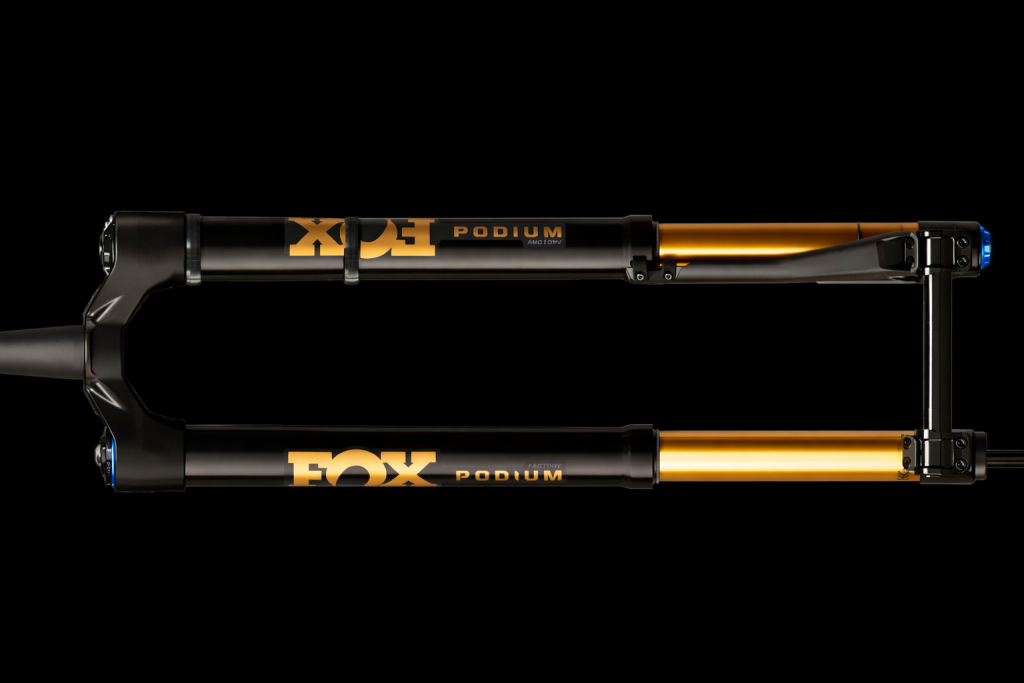
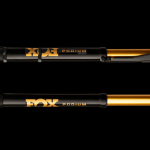
The FOX Podium inverted fork is redefining mountain bike suspension. In this detailed review, we break down its performance across downhill and enduro terrain, compare it with traditional forks, and evaluate its real-world ride feel. We also cover pricing in PHP, availability, maintenance, and whether it truly delivers value for aggressive riders and bike park enthusiasts.
In the evolution of mountain bike suspension, true breakthroughs are rare. Most upgrades are just small tweaks—better damping, slightly lighter weight, a bit more stiffness. But the FOX Podium inverted fork? This one hits differently. 😏 It challenges what we’ve always accepted about fork design and brings back a concept that many riders once thought wouldn’t work in mainstream MTB. FOX didn’t just experiment here—they committed. The Podium is their first serious move into modern inverted (USD) forks, built for aggressive riders who care more about traction, control, and downhill confidence than just shaving grams.
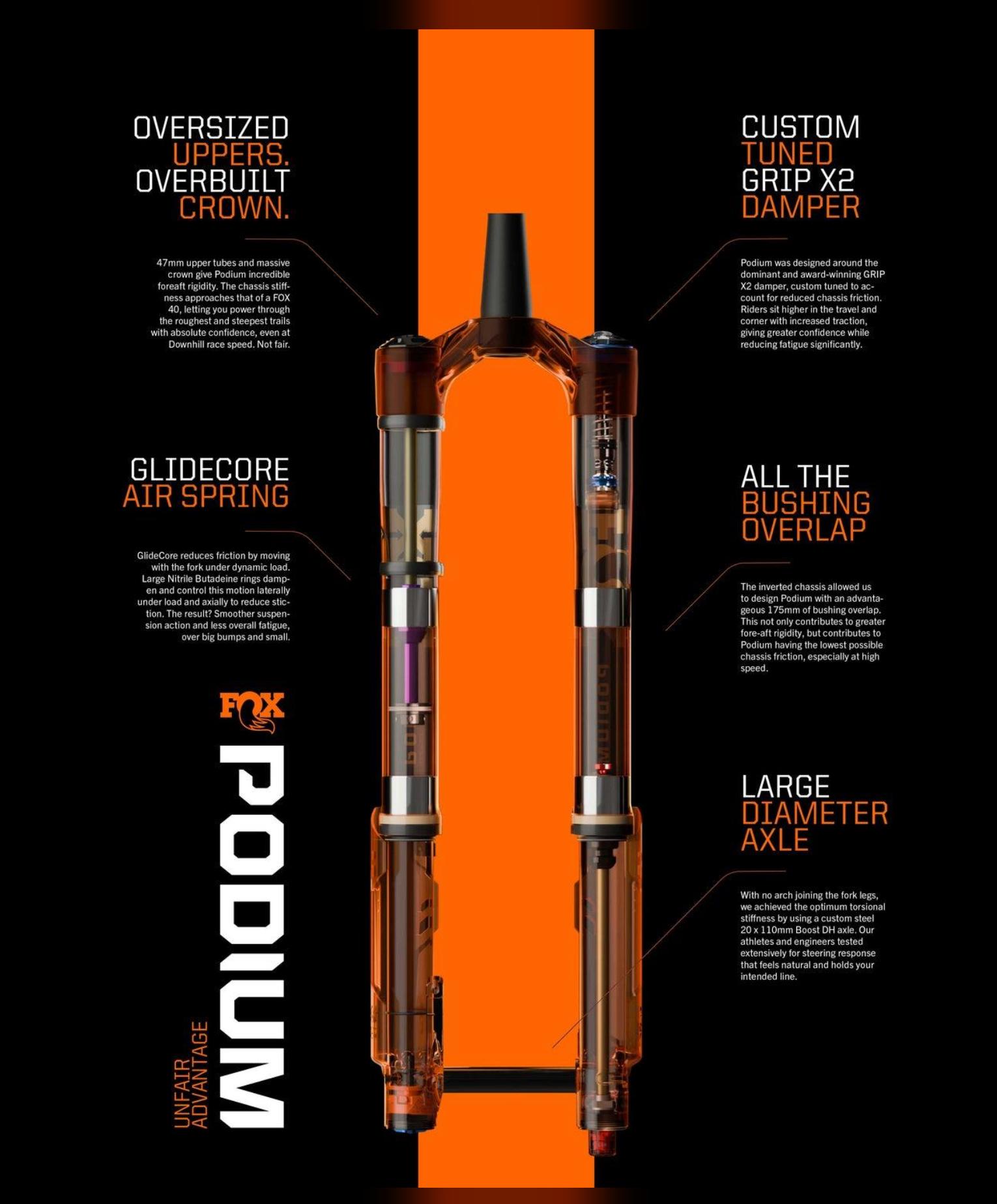
At its core, the FOX Podium is all about one thing: grip. By flipping the fork design upside down, FOX moves more weight closer to the frame and reduces unsprung mass at the wheel. What does that mean on the trail? Faster response, smoother tracking, and less chatter when things get rough. 🔥 Small bumps feel almost invisible, and the front wheel stays glued to the ground. With a massive 47 mm chassis, GRIP X2 damper, and GlideCore EVOL air spring, the fork delivers a mix of support and sensitivity that feels purpose-built for aggressive riding. Of course, nothing comes for free—the fork weighs around 2.7 kg, which is noticeably heavier than your typical single crown setup.
Point it downhill, and everything starts to make sense. 🏔️ This is where the Podium truly shines. On steep descents and rock gardens, the front end feels incredibly planted—like it just wants to stay on the ground no matter what you throw at it. Instead of bouncing or deflecting, it tracks smoothly through rough terrain, letting you carry speed with confidence. The stiffness adds another layer of control, especially when braking hard or hitting high-speed compressions. Honestly, it starts to feel closer to a downhill dual crown fork than a regular enduro fork. The only catch? That extra weight can make the bike feel slightly nose-heavy when jumping—but for most riders, the trade-off is worth it.
Take it into enduro terrain, and things get a bit more interesting. 😅 On fast, rough stages, it’s a weapon—stable, smooth, and incredibly confidence-inspiring. It eats braking bumps and keeps momentum like it’s nothing. But in tight switchbacks or slow technical sections, the steering feels a little different. Not bad—just different. It’s less “sharp” and more “flowy,” meaning you’ll need to adjust your riding style a bit. Riders who like smooth lines and speed will love it, while those who rely on quick, snappy handling might take some time to adapt.
For everyday trail riding, though… yeah, this is probably too much fork. 😬 The performance is there, but you won’t really use it unless you’re riding hard all the time. The added weight becomes more noticeable on long climbs, and on smoother trails, it just feels overbuilt. It climbs fine, but you’ll definitely feel that extra front-end weight after a while. Simply put, this fork wasn’t made for casual rides—it was made to go fast, and go hard.
Now let’s talk money. 💸 The FOX Podium sits at around AUD $3,000–$3,349, which translates to roughly ₱120,000–₱130,000 PHP. Even discounted, you’re still looking at around ₱95,000–₱110,000 PHP. That’s serious money—basically the price of a full mid-range bike in the Philippines. And availability? Not easy. This isn’t something you casually pick up in-store. Most riders will need to special order it, deal with shipping, and possibly pay extra import costs.
Maintenance is similar to other high-end FOX forks, with service intervals around 150 hours, but the inverted design adds a bit more complexity. You’ll also need a 20mm hub, which might mean upgrading your front wheel. Parts are available, but since it’s still relatively new, they’re not as easy to find as components for the FOX 36 or 38. So yeah—owning this fork means committing not just to performance, but also to maintenance.
At the end of the day, the FOX Podium is not for everyone—and that’s exactly the point. For downhill riders, bike park enthusiasts, and aggressive enduro racers, it offers a level of traction and control that’s hard to match. 🤯 It feels planted, smooth, and incredibly capable when things get rough. But for casual riders or those on a budget, it’s probably overkill.
The FOX Podium isn’t here to replace your current fork—it’s here to show what’s possible next. 🚀 It’s bold, different, and a little bit extreme. And honestly, that’s what makes it exciting.
This isn’t just a fork. It’s a glimpse into the future of MTB suspension.
Jerwin Mtb is a mountain biking content creator and gear analyst behind Elev8MTB. Graduate at Kaplan Business School Sydney Australia in Masters Research. As a hobby in mountain biking he has hands-on experience in downhill and trail riding, he focuses on bike technology, real-world performance testing, and industry insights across the Philippines and Australia as part of his research.
The Canyon Torque AL 8 combines aluminum durability, modern geometry, and long-travel capability into a gravity-focused platform built for bike parks, jumps, and aggressive mountain riding.
The Frameworks 2026 Downhill Bike brings refined race-focused geometry, updated frame construction, and adjustable suspension kinematics into a World Cup-ready package. Built with a 6061 aluminum front triangle, carbon rear end, and progressive suspension design, this latest evolution focuses on stability, confidence, and high-speed downhill performance.
The Hope Pro 5 is one of the most respected premium MTB hubs in the world, known for its loud signature sound, fast engagement, excellent durability, and smooth performance. Built in the UK and trusted by enduro and downhill riders, it delivers reliable power transfer, strong sealing against mud and rain, and a premium feel that makes any bike stand out on the trail.